
Habitat and distribution
Dasylirion are a type of desert plant belonging to the Nolinaceae family, distributed across Texas, New Mexico, and Arizona. In Mexico, Dasy-lirion is commonly referred to as sotol, the same name as the alcoholic beverage made from the distilled centre of the Dasylirion plant.
Morphology
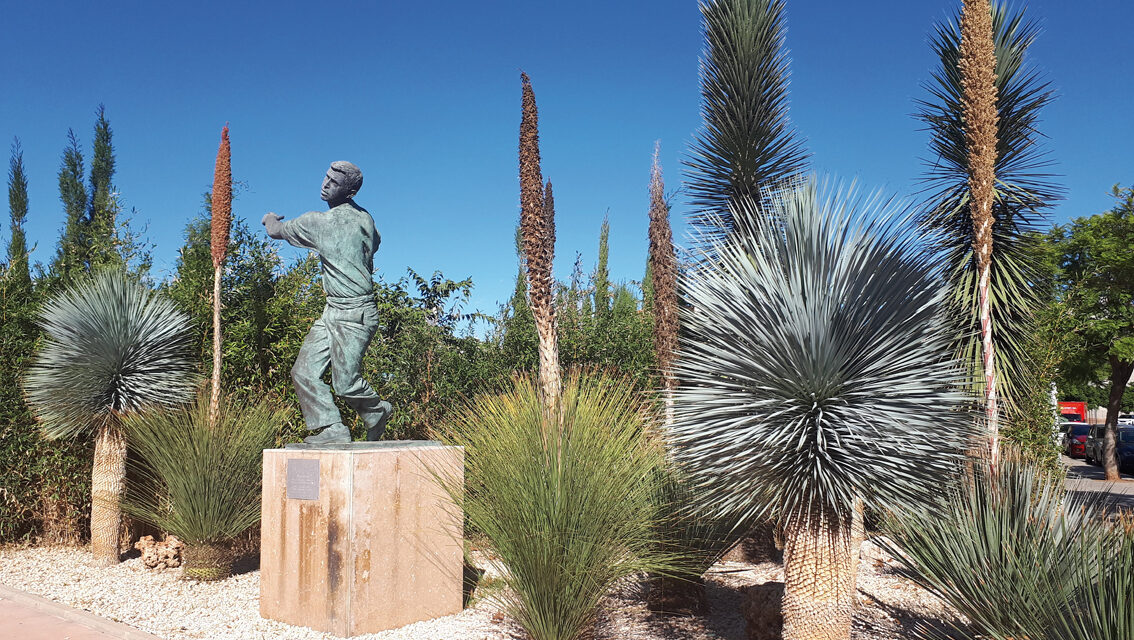
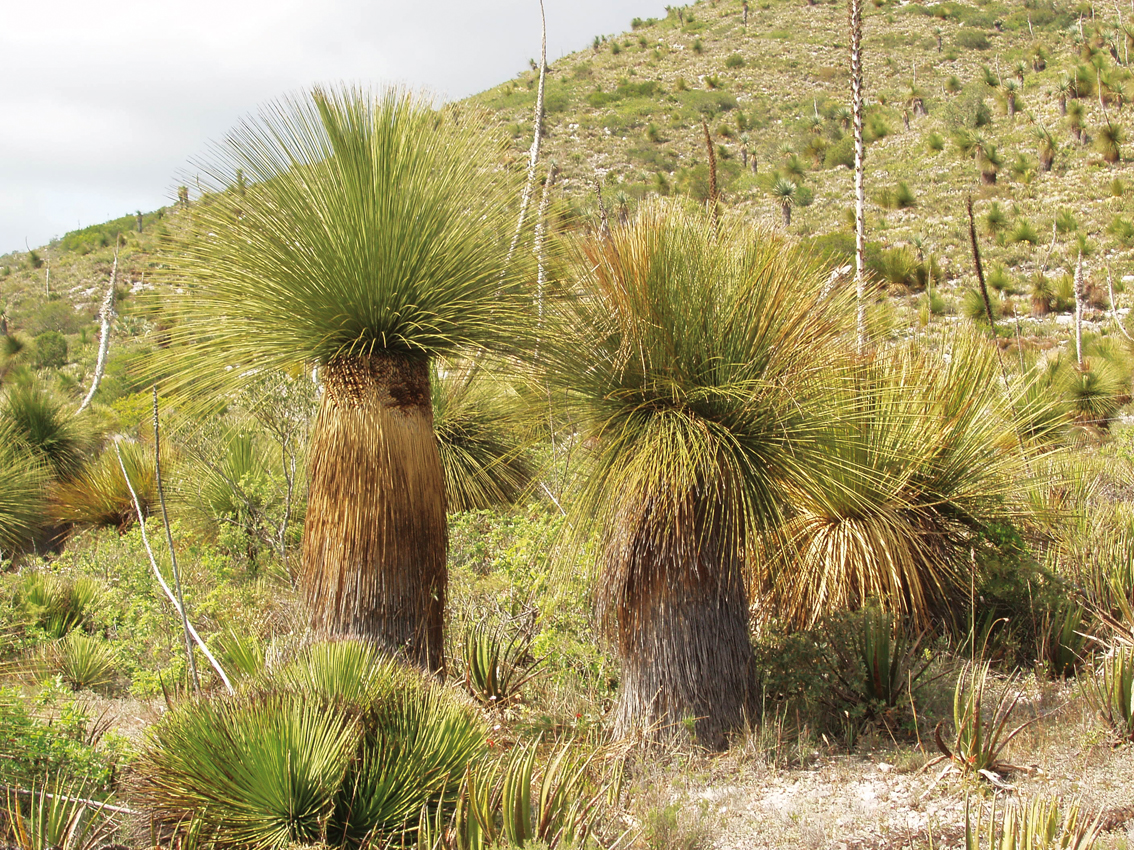
Most species of Dasylirion are shrub-like or have very short trunks. Only some species are tree-like, generally the most valued for ornamental purposes. These plants prefer rocky soils and steep slopes of hills with high drainage. They are also commonly found in their native regions at high altitudes beneath pine and oak forests.
The Dasylirion leaves are long and linear and can range in color from yellow-green to dark green or even bluish-gray. The edges of the leaves in most Dasylirion species are serrated, with small brownish teeth.
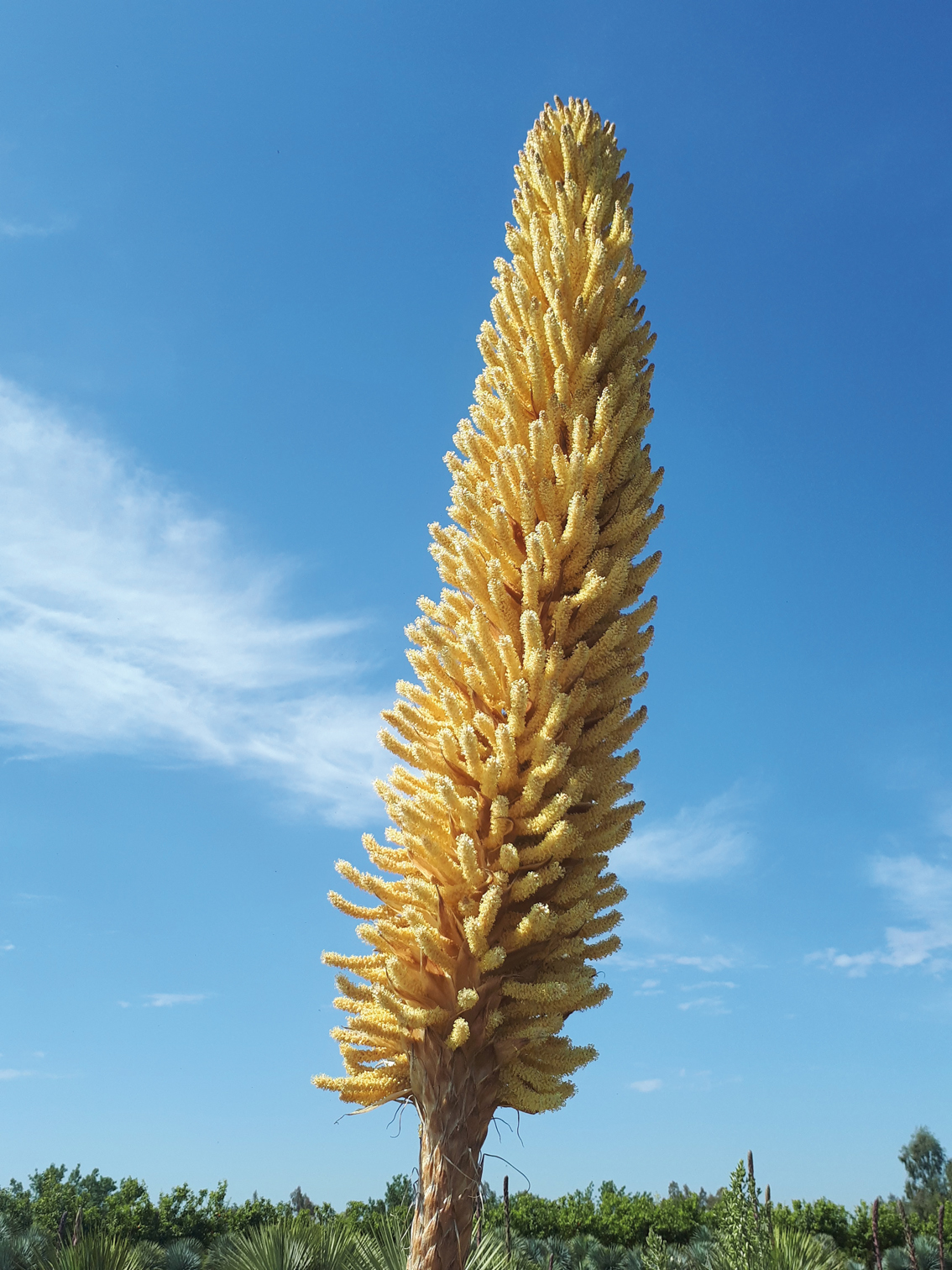
Dasylirion forms inflorescences of different sexes depending on the plant. These inflorescences are narrow, long spikes that can reach over two meters in height and are made of small yellow flowers. After flowering, the original head re-sprouts, giving rise to a new head, which, in the case of tree-like species, will eventually lead to a branched trunk.
Species for ornamental use
There are many different spe-cies of Dasylirion, and much controversy exists regarding the botanical classification of some of them. For this article have been selected the most common ornamental species:
Dasylirion quadrangulatum and Dasylirion longissimum (Mexican Grass Tree). This is by far the most valued species for ornamental purposes. The differences between both species or if to consider both the same one is a common debate among botanists.
The truth is that some plants have much longer leaves than others, but beyond this characteristic, there are no notable differences, therefore, professionally, they are considered the same species. It is one of the largest species, with trunks that can reach up to five meters in height. It has tubular, very long leaves similar to grass, and it is the only species with no serrated leaves.
Dasylirion quadrangulatum can be grown in full sun or semi-shade, but it is important to ensure it has very good drainage. It is an extremely slow-growing plant, taking many years to develop its trunk. It tolerates minimum temperatures of -14°C and is an excellent plant for both gardens and containers due to its hardiness and slow growth.
Another plant that may be confused with D. quadrangulatum is Xanthorrhoea spp., as both species look very similar at first glance. However, Xanthorrhoea is native to Australia and behaves differently in cultivation.
Dasylirion texanum, Dasylirion serratifolium, Dasylirion acotrichum, Dasylirion lucidum.
All these species of Dasylirion have green leaves and are tree-like. Unlike Dasylirion quadrangulatum, their leaves are serrated, and depending on the species, they can be longer or shorter and wider or narrower. There is also the possibility of hybridization, so it is not easy to determine their differences at first sight. Based on our experience with these species, we can generally say that Dasylirion acotrichum grows more vigorously and has thicker trunks than the other species. Likewise, Dasylirion lucidum tends to have curled filaments at the tips of its leaves, resembling a pig’s tail.
These species also develop trunks that can reach several meters in height but it takes a long time, just like D. quadrangulatum. Their cultivation requirements are similar, but these species are more resistant to cold, withstanding temperatures of -15º/-18ºC.
Dasylirion wheeleri and Dasylirion berlandieri: These two species are very similar morpho-logically to the ones mentioned above, but their main difference is that their leaves have a beautiful bluish-gray tone.
The primary visible difference between the two species is that Dasylirion berlandieri has broader leaves and appears more resistant to pests. In terms of cultivation and resistance to low temperatures, they are also similar to the previous green species.
Elena Espinosa Pascual
Viveros Canós
